What is Yoga?
Yoga is a Hindu discipline aimed at training the consciousness for a state of perfect spiritual insight and tranquillity. And it is a system of exercises practiced as part of this discipline to promote control of the body and mind.
Yoga the general term for spiritual disciplines in Hinduism, Buddhism, and throughout South Asia that are directed toward attaining higher consciousness and liberation from ignorance, suffering, and rebirth, more specifically it is also the name of one of the six orthodox systems of Hindu philosophy. Both Vedic and Buddhist literature discuss the doctrines of wandering ascetics in ancient India who practiced various kinds of austerities and meditation.
Pathanjali divides the practice of yoga into eight stages. Yama, or restraint from vice, and niyama, or observance of purity and virtue, lay the moral foundation for practice and remove the disturbance of uncontrolled desires. Asana, or posture, and pranayama, or breath control, calm the physical body, while pratyahara, or withdrawal of the senses, detaches the mind from the external world. Internal control of consciousness is accomplished in the final three stages: dharana, or concentration, dhyana, or meditation, and samadhi. Through such practices yogis acquire miraculous powers, which must ultimately be renounced to attain the highest state. In samadhi the subject-object distinction and one's sense of an individual self disappear in a state usually described as one of supreme peace, bliss, and illumination. A common feature of different traditions of yoga is one-pointed concentration on a chosen object, whether a part of the body, the breath, a mantra, a diagram, a deity, or an idea.
Yoga is a science of the mind. It is an ancient system of exercise that includes thousands of physical and mental exercises designed to strengthen and balance the body, rejuvenate the nervous system, and concentrate the mind. Yoga integrates body and mind so that you can experience your essence: inner peace.
Is Yoga a Religion?
No, yoga is not a religion; it is a technology, and a discipline similar to martial arts. Yoga is a both an art and a science. It is a science because the results are known. Yoga exercises have been practiced for over thousands of years by millions of people, so the results of particular exercises and meditation techniques have become predictable. It is an art in the way each individual perfects his/her own yoga practice.
Is Yoga Difficult?
Yoga is a holistic technique for physical, mental, and spiritual growth. In yoga, each person progresses at their own pace, and gradually develops the physical flexibility to perform the exercises more perfectly. Every yoga exercise is conducted in a controlled and conscious way. It should not physically hurt to do yoga. Most yoga exercise sets take 20-30 minutes to complete.
Where Does Yoga Come From?
The practice of yoga goes back a very long time. According to some yogic masters, the technology is twenty-five thousand years old. What modern archaeology knows about the origin of yoga dates back more than 4,000 years ago, to the fertile Indus Valley. During the archaeological excavations in Mohenjo-Daro artefacts radiocarbon dated back more than 4,000 years were discovered that show men sitting in classic yoga postures. Yoga is also part of Ayurveda, considered to be the world’s oldest traditional medical system, and Ayurveda has at least 5,000 years of dated history.
Scientific Research
Much international scientific research has been conducted on the measurable effects of yoga. Although yoga practitioners will tell you yoga makes them feel good, scientists are much more interested in the objective and measurable effects. What does medical science say about yoga? Medical research in this area is extensive. Thousands of scientific research papers have been published on yoga and meditation and their measurable effects on body and mind. In the early 20th Century, around 1910, the German doctor and nerve specialist Dr. Johannes H. Schultz conducted much research on yoga and hypnosis. On the basis of that research, he built his own relaxation and meditation system, known today as Autogen Practice. This system is well known within the world of European sports. In the 1930’s, the French cardiologist T. Brosse traveled to India to examine the yoga phenomena. In the 1920’s and 1930’s, much interest was focused on the psychological effects of yoga. The famous Swiss psychologist Carl Jung was interested in Kundalini Yoga as a supplement to his psychological theories. In 1932, Jung gave a series of lectures on Kundalini Yoga in Zurich, published under the title "The Psychology of Kundalini Yoga" by Princeton University Press 1966. The following is a brief summary of just a little of the recent medical scientific research that has been performed on the positive effects of yoga and meditation since the late 1960’s, when serious modern academic and scientific attention first turned to analysis of the effects of yoga and meditation upon a wide range of medical and psychiatric conditions.
Science of Life
Yoga is a complete science of life that originated in India many thousands of years ago. It is the oldest system of personal development in the world encompassing the entire body, mind and spirit. It is the union between a person's own consciousness and the universal consciousness. The Ancient Yogis had a profound understanding of man's essential nature and of what he needs to live in harmony with himself and his environment. They perceived the physical body as a vehicle, with the mind as driver, the soul as man's true identity, and action, emotion and intelligence as the three forces which pull the body-vehicle. In order for these to be integrated, these three forces must be in balance. Taking into account the interrelationship between body and mind, the Yogis formulated a unique method for maintaining this balance - a method that combines all the movements you need for physical health with the Breathing and Meditation techniques that ensure peace of mind.
The classical techniques of Yoga date back more than 5,000 years. In ancient times, the desire for greater personal freedom, Health and long life, and heightened self-understanding gave birth to this system of physical and mental exercise which has since spread throughout the world. The word Yoga means "to join or yoke together," and it brings the body and mind together into one harmonious experience.
Branches of Yoga
Hatha Yoga
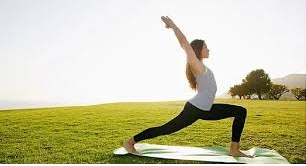
Hatha Yoga is the path of Physical Yoga or Yoga of Postures is the most popular branch of Yoga. Hatha Yoga considered the body as the vehicle for the soul. It uses Physical Poses or Asana, Breathing Techniques or Pranayama, Meditation in order to bring the body in perfect health and for the more subtle spiritual elements of the mind to emerge freely. The practice of Hatha Yoga will result to the union of the body and the soul, it aims to make the body perfect and fill it with life force.
The aspect of Yoga that most people are aware of is "Hatha Yoga" or the Yoga of Postures. Developing a strong, healthy and flexible body is but one aspect of this ancient science. Yogis revere the body. However, they do this because they realize that a weak and tired body is a hindrance towards spiritual progress. By being mindful of their breathing while they practice the various postures, they train themselves to discipline their minds. By disciplining their minds, they are able to abide by the principles which Yoga stands for. First amongst these principles is "Ahimsa", or peacefulness in thought, deed, and action not only to other human beings, but also to all living creatures, and most importantly to our own selves. Remember this when you tend to push yourself into a forward bend! You will be able to do it over a period of time, just be easy on yourself.
Bhakti Yoga
Bhakti Yoga is the path of heart and devotion or the Yoga of devotion. Yogis who practice Bhakti Yoga sees the Divine in everyone and everything he encounters. This leads him to develop love, acceptance and tolerance for all. Bhaki Yoga teaches a person to have a devotion to God and all things through devotion to life and love.
Raja Yoga
Raja means "royal". Raja Yoga is the path of Yoga that focuses on meditation and contemplation. It is based on the Eight Limbs of Yoga which was discussed in the Yoga Sutra. This Yoga path teaches deep self respect through self mastery. The self here is honoured. Raja Yoga believes that the universe exists for the self, giving the self an illusion of centrality which results to self respect and respect for all creatures. Raja Yoga is also referred to as the King of Yogas, majority of its practitioners live in spiritual or religious orders.
Jnana Yoga
Jnana Yoga is the path of Yoga that deals with wisdom and knowledge or the Yoga of the mind. Jnana Yogis pays tribute on man's intelligence. They try to surpass limitations by unifying intellect and wisdom. Jnana Yoga tries to obtain existence beyond doctrine and ideological controversies by accepting all other philosophies and religion. It also uses an open, rational and curious mind in studying the spirit.
Karma Yoga
Jnana Yoga is the path of Yoga that deals with wisdom and knowledge or the Yoga of the mind. Jnana Yogis pays tribute on man's intelligence. They try to surpass limitations by unifying intellect and wisdom. Jnana Yoga tries to obtain existence beyond doctrine and ideological controversies by accepting all other philosophies and religion. It also uses an open, rational and curious mind in studying the spirit.
Tantra Yoga
Tantra Yoga is the path of ritual and perhaps the most misunderstood path. Some may think of Tantra Yoga as sorcery, witchcraft, magic spell or some mysterious formula. Most people perceive Tantra Yoga as sexual. All of these perceptions are far from truth. Tantra is the knowledge concerning Tattva (Truth or Brahman) and Mantra (mystic syllables). It utilizes rituals to respectfully experience the sacred in everything we do, not just sex though sex is a part of it. It aims to expand our awareness in all states - whether awake or asleep. Tantra Yoga practitioners must have purity, humility, devotion, courage, dedication to his Guru, cosmic love, faithfulness, contentment, dispassion, non-covetousness, and truthfulness.
Easy to Practice
Anyone can practice Yoga. You don't need any special equipment, clothing, or lessons; all you need is the will to pursue a healthier and happier lifestyle. The Yoga Postures and Asanas exercise every part of your body. The stretching involved helps in toning your muscles and joints, including your spine and your entire Skeletal System. Yoga not only facilitates in improving your body but also aids in keeping your Glands, Nerves and your other internal organs in radiant health. By releasing physical and Mental tension, you will liberate vast resources of energy. The Yogic Breathing Exercises known as Pranayama revitalize the body and help control the mind, leaving you calm and refreshed; combine this with the practice of positive thinking and Meditation, and the result will be increased clarity, mental power and concentration.
Yoga is for You
To understand what Yoga is all about, you need to experience it for yourself. At first glance it may seem to be just a series of strange physical postures which keep the body lean and flexible. But in time, anyone who continues with regular practice becomes aware of a subtle change in their approach in life. Yoga makes you discover your true nature, a state of inner peace, through the practice of toning and relaxing your body and relaxing your mind. Yoga helps in realizing one's self, in finding what one seeks - consciously or unconsciously. Controlling the mind will give you the ability to do a lot of things; it will set you free from your illusions and preconceptions that prevent you from fulfilling yourself.